
How VoIP Works, in 3 Points
There are three different ways to make a VoIP call. Each of these ways has its own requirements and implications.
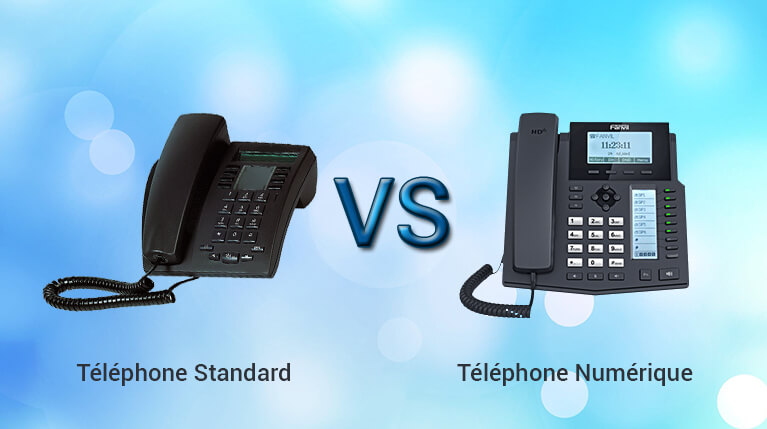
Traditional telephony is increasingly being replaced by IP telephony. Many businesses have seen their revenue grow significantly thanks to better-optimized communications and improved customer relationship management. IP telephony features bring many advantages that set it apart from traditional telephony. So what exactly are the differences between traditional telephony and IP telephony?
IP telephony is not simply an upgrade of traditional phones. It comes with a new technology that carries a person's voice to another person in a different way.
With traditional phone systems, voice communication travels over copper lines on the public switched telephone network (PSTN). The PSTN relies on circuit-switching technology. VoIP, on the other hand, delivers voice calls over data networks such as the internet or internal corporate LANs. Unlike traditional telephony, IP telephony uses packet-switching technology.
When you make a call from a regular phone line, circuits open all along the path from the caller's location to the recipient's location. This is one of the reasons long-distance calls are much more expensive. Also, when a call is made over a traditional phone line, the open circuits remain tied up, so no other call can travel the same path.
With IP telephony, by contrast, the voice is converted into data packets that are sent to their destination. The advantage of IP telephony is that these packets can take different routes. What matters is that on arrival they are reassembled in order so the message is delivered as coherent sound. Another big advantage of IP telephony is that it requires no special infrastructure. It uses the existing internet connection. This allows VoIP providers to charge relatively lower rates than phone carriers.
Small businesses usually have to bear heavy costs to get the advanced features that let them project a professional image to their customers. Most of the time, these features remain out of reach for these businesses, preventing them from growing their operations as they would like.
IP telephony puts an end to these various drawbacks, making most of these features available in its basic plans at very affordable prices for small businesses and self-employed professionals alike. Many providers also offer packages tailored to different industries, combining features by sector at affordable prices.
Traditional phones restricted users to a single device fixed in one particular place. These systems tied the phone number to a physical location rather than to the user. With VoIP, things are different. The phone numbers you buy are assigned to you, so you can use them from any device. This means any device, whether a desk phone, computer, mobile phone or tablet, can be used to make or receive calls.
There are three different ways to make a VoIP call. Each of these ways has its own requirements and implications.

VoIP, or Voice over Internet Protocol, is a technology that converts analog audio signals into digital data and transmits them over the internet.

One of the challenges businesses often face is the high cost of their phone bills.
Tell us about your project: we will propose the right solution, on-site or in the cloud.