
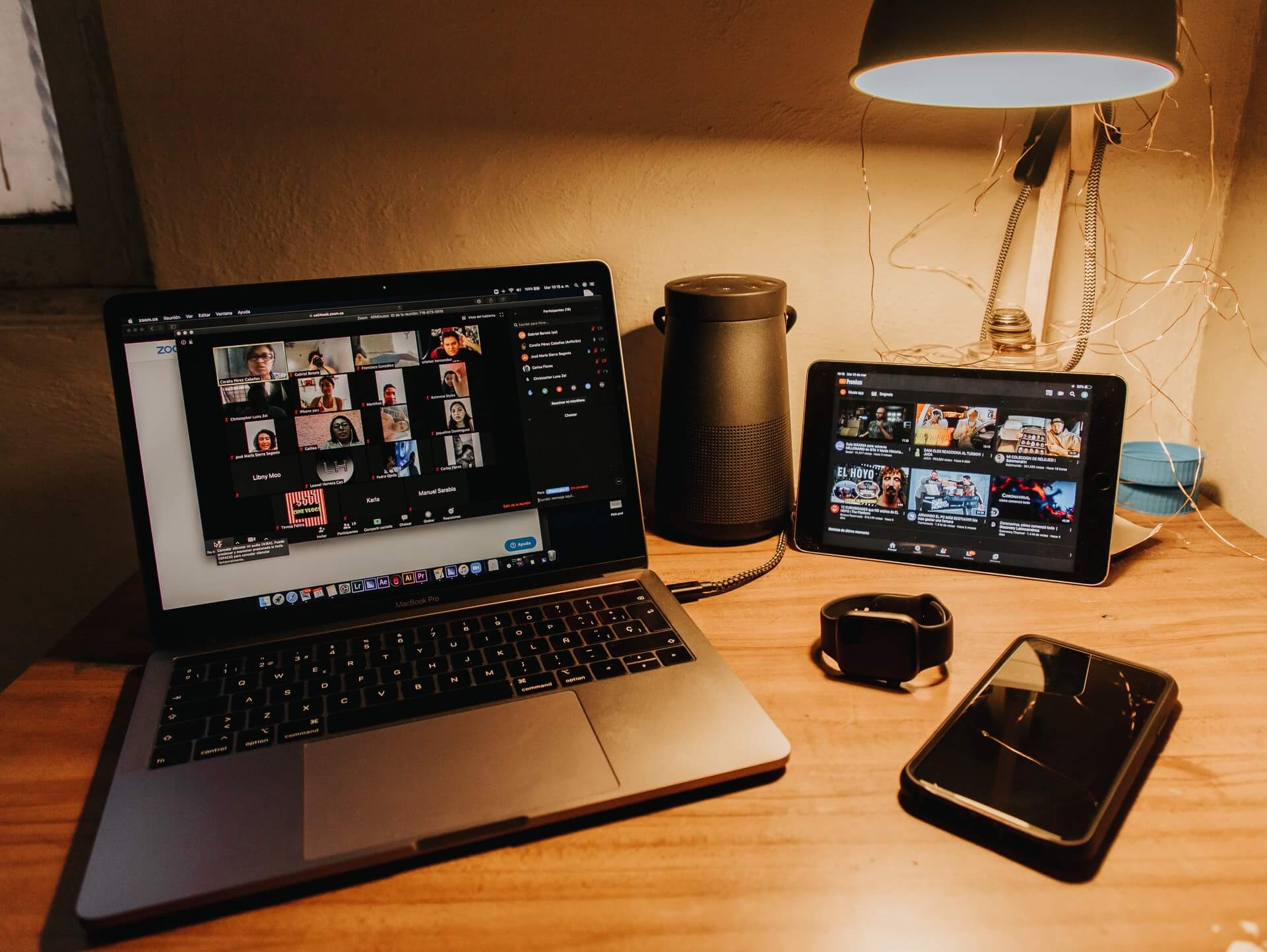
Video Conferencing: Connect Customers and Colleagues
At a time when professional efficiency and mobility are key issues for businesses, collaboration tools are clearly multiplying.
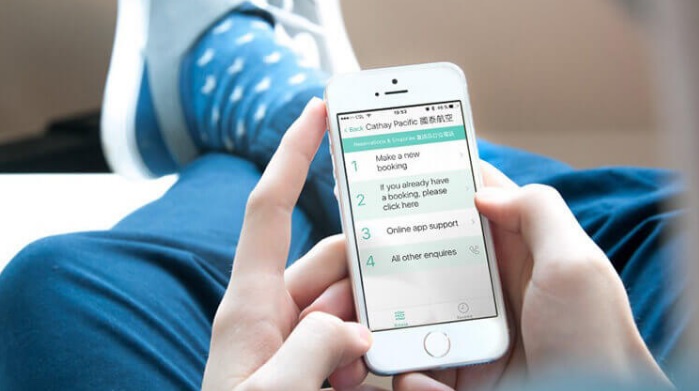
Customer empowerment is one of the most impactful levers for a modern business. And one of the best strategies to achieve it is self-service. Business customers are in an ever greater hurry to find answers to their questions. The best way to satisfy them is to give them a tool that provides exactly the answers they expect in no time at all. That tool is IVR, or interactive voice response. IVR is a telephone menu system that uses speech recognition or touch tones to identify and segment callers and route them to the most qualified agents. Of all its features, the most advanced one IVR has to offer is visual IVR. This feature makes IVR more effective by letting customers move through menus faster and get their answers more efficiently.
With visual IVR, customers no longer need speech recognition to find their way. They can simply tap their screen to get everything they need through visual menus. Visual IVR also lets users go straight to the information they need without first working through long menus. When necessary, IVR can also route customers to agents, with support for text-to-speech in several languages on both the inbound and outbound sides of the call. Thanks to the steps the customer has already completed, agents have a good idea of callers' needs before they even get them on the line. This lets them resolve issues faster.
Visual IVR offers a major advantage to customers and contact centers alike. With visual IVR, customers have already stated their needs before being routed to an agent. The advantage here is that they are not routed to just any agent, but to the most qualified one. This saves both sides an enormous amount of time, since they do not have to go through the process of transferring the line and briefing another agent on the request. It also builds customer trust, as customers see their needs consistently met quickly and efficiently. The likelihood of abandoned calls is also much lower, since customers who hung up while in the queue can be called back automatically as soon as agents become available.
Smartphones play an active role in interactions between businesses and customers. The vast majority of people visiting a company's or brand's website do so from their phones. A Google study found that after a first contact with a business (an in-store purchase, an ad, a presentation, an email campaign, etc.), 74% of customers are likely to visit the company's mobile site if it was user-friendly, while 48% of these customers are frustrated if the company does not have a mobile-optimized site. Visual IVR gives customers fast access to customer service, which is especially valuable when they are in a store in the middle of a purchase or torn between competitors.
Cost-effectiveness for contact centers: visual IVR is less expensive to install than traditional IVR systems and can even be integrated seamlessly into an existing IVR system. Agents also spend less time on the phone with customers, since visual IVR delivers the vast majority of the answers customers are looking for. Visual IVR optimizes self-service by making companies' customer service more efficient, which leads to high customer satisfaction. Automated and personalized service come together to satisfy customers, drive sales and deliver a more modern customer experience.
At a time when professional efficiency and mobility are key issues for businesses, collaboration tools are clearly multiplying.
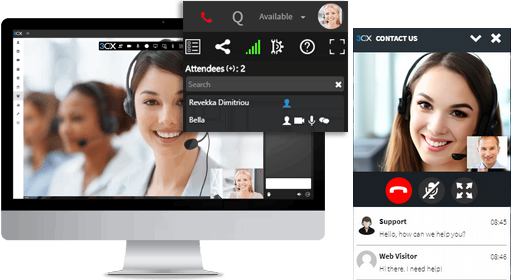
Imagine being able to open a window with your website visitors so they can simply talk to you.

There are three different ways to make a VoIP call. Each of these ways has its own requirements and implications.
Tell us about your project: we will propose the right solution, on-site or in the cloud.